
Summary
- What is expense reporting? – Expense reporting is the end to end process through which employees capture business costs, attach receipts, code line items to the correct accounts, route claims for approval, and trigger reimbursement. It produces the audit trail finance teams need for compliance and spend visibility.
- Why does it matter? – Without a controlled expense reporting workflow, organisations face delayed reimbursements, policy violations, duplicate payments, and weak audit readiness. Structured reporting connects every transaction to enforceable policy rules and ERP postings.
- How can it be automated? – Expense reporting automation uses OCR receipt capture, policy rule engines, approval workflow routing, corporate card feeds, and ERP integration to reduce manual data entry and speed up reimbursement cycles. FinTrans Solutions delivers this through SAP Concur implementation and workflow design.
What expense reporting covers
Expense reporting begins when an employee incurs a business cost. That cost might be a flight, a taxi fare, a hotel stay, or a meal with a client. The employee creates an expense claim, attaches a receipt, and assigns the correct expense type and cost centre.
The claim then moves through an approval workflow. A manager reviews the submission against the company’s expense policy. Automated policy checks can flag out of policy items, duplicate entries, or missing receipts before the approver even sees the report.
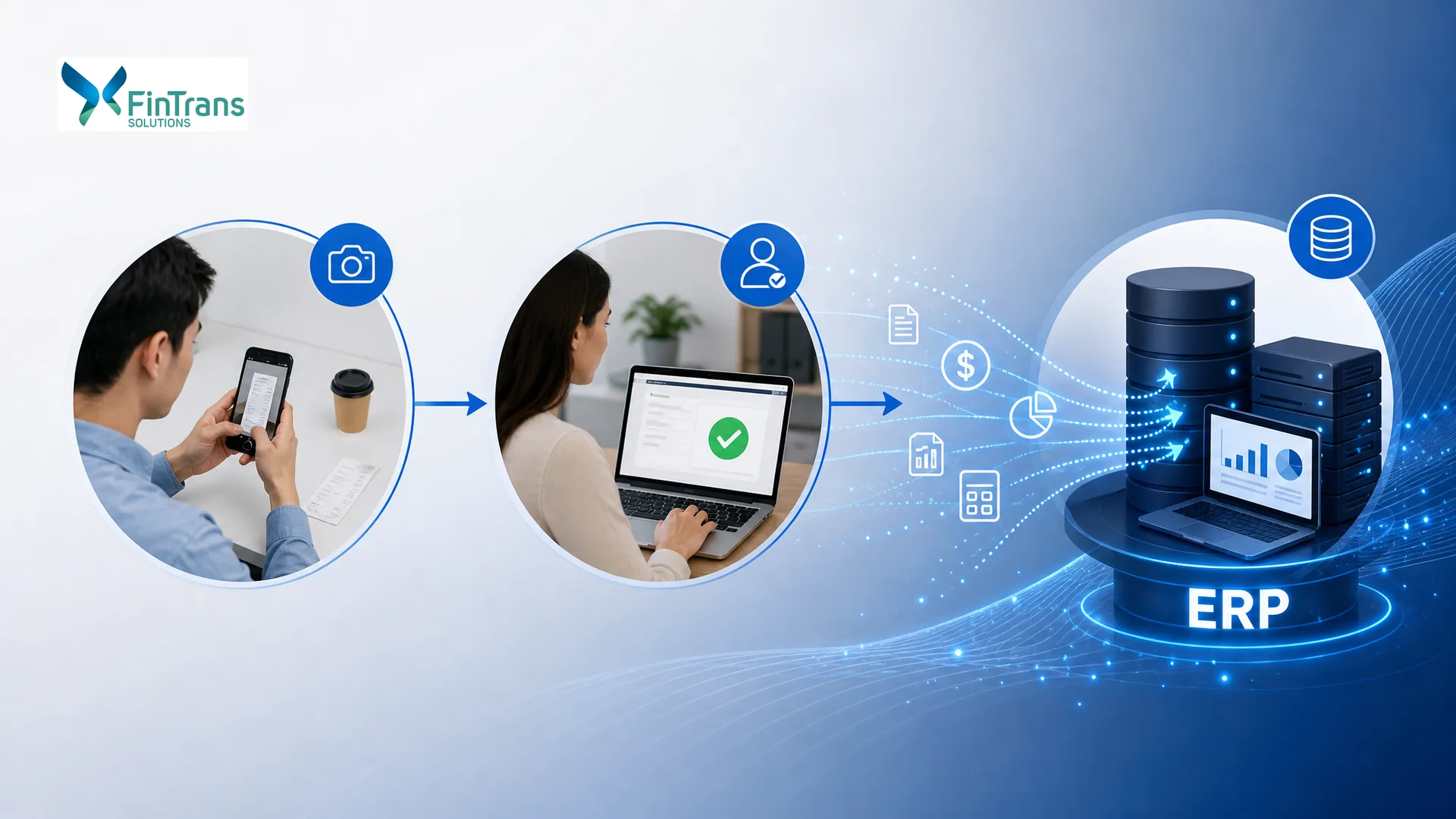
Once approved, the finance team posts the data to the ERP system. General ledger codes, cost centres, and tax details flow into accounts payable. The employee receives reimbursement, and the organisation retains a complete audit trail.
Common gaps in manual processes
Manual expense reporting relies on paper receipts, spreadsheet templates, and email approvals. Each handoff introduces delay and risk. Receipts get lost. Coding errors pass unnoticed. Approvers lack visibility into policy violations until month end.
For organisations operating across multiple countries, manual processes also struggle with local compliance. German tax rules, for example, require specific receipt content for VAT recovery. Per diem rates and mileage reimbursement thresholds vary by jurisdiction. Without built in controls, finance teams spend hours reconciling data that an automated system would validate at the point of entry.
Credit card reconciliation adds another layer. Corporate card transactions must be matched to submitted expense lines. Delayed or missing transactions create reconciliation errors that cascade into financial reporting.
How automation transforms reporting
Expense reporting software replaces manual steps with digital workflows. OCR receipt capture extracts merchant, amount, and date data from a photo of a receipt. Policy rule engines check each line item against configurable rules before the claim reaches an approver.
Approval workflows route claims to the correct manager based on cost centre, amount threshold, or project code. Corporate card feeds import transactions automatically, reducing duplicate entry. ERP integration posts approved expenses directly to accounts payable and the general ledger.
FinTrans Solutions specialises in designing and implementing these workflows within SAP Concur. From policy configuration and credit card integration to ERP connectivity and role based training, FinTrans Solutions ensures the automated process matches each organisation’s compliance requirements and reporting needs.
Spend visibility improves immediately. KPI dashboards surface expense trends, top spenders, vendor concentration, and policy violation rates. Finance leaders gain real time insight instead of waiting for month end consolidation.
Expense reporting, when properly automated, becomes a source of reliable financial intelligence rather than an administrative burden. Organisations that invest in structured workflows and expert implementation, such as the SAP Concur services FinTrans Solutions provides, reduce reimbursement cycle times, strengthen audit readiness, and give employees a faster, simpler claiming experience.
FAQs
- What is expense reporting?
Expense reporting is the process employees use to document business costs, attach receipts, obtain manager approval, and receive reimbursement. It creates the financial records and audit trail organisations need for compliance and spend control.
- How can expense reporting be automated?
Automation uses OCR receipt capture, policy rule engines, approval workflow routing, corporate card feeds, and ERP integration to eliminate manual data entry. FinTrans Solutions implements these capabilities through SAP Concur configuration and workflow design.
- What should be included in an expense report?
An expense report should include the date, merchant name, amount, expense category, cost centre, receipt image, and any required tax details such as VAT. Proper coding ensures accurate ERP posting and audit readiness.
DownloadPublish