
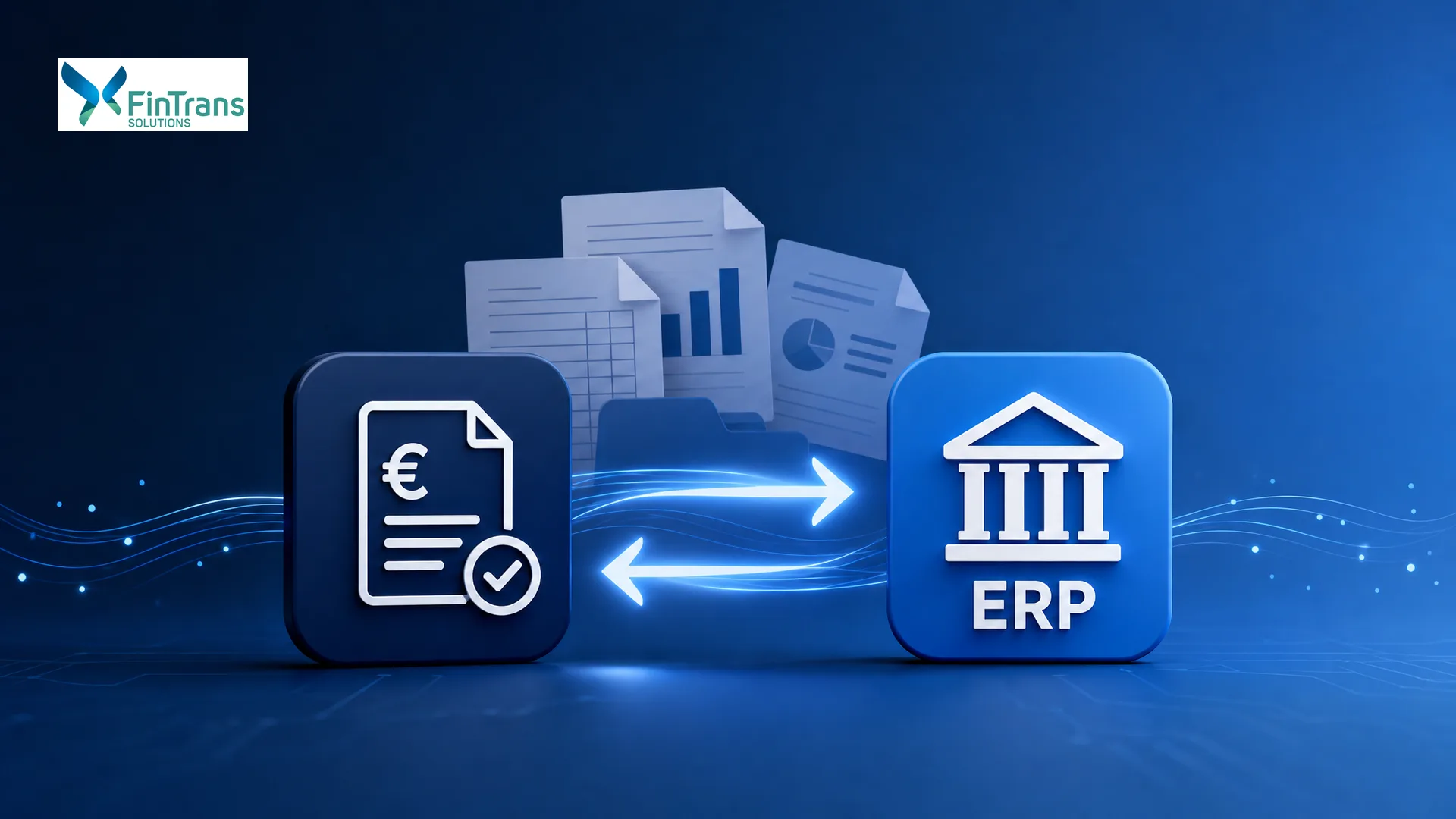
When expense data sits in one system and financial postings happen in another, someone fills the gap manually. That gap is where posting errors, duplicate entries, and reconciliation delays live. ERP integration eliminates it. FinTrans helps German and multinational enterprises connect SAP Concur to their ERP, HRMS, and payment systems so travel and expense data flows accurately from submission to general ledger.
TL;DR – Summary
- What is ERP integration? – ERP integration is the automated exchange of data between an enterprise resource planning system and other business applications. In travel and expense management, it connects expense platforms like SAP Concur to finance, HR, and payment systems so transactions post without manual intervention.
- Why does it matter for T&E? – Without ERP integration, finance teams re-key expense data into the general ledger. This creates posting errors, delays reimbursement, and limits spend visibility. Automated data flows solve each of these problems.
- What data flows are involved? – Typical flows include inbound imports (employee master data, cost centre hierarchies from HRMS or ERP) and outbound extractions (approved expense postings, AP and GL files, payment instructions sent back to the ERP).
What ERP integration means
ERP integration connects two or more business systems so they share data automatically. In travel and expense management, the core connection runs between an expense platform and the organisation’s ERP. SAP Concur, for example, can exchange data with SAP ECC, SAP S/4HANA, or non-SAP ERPs through standard connectors, web services, or SFTP file transfers.
The goal is straightforward. Employee master data, cost centres, and GL account structures flow into the expense system. Approved expense reports, corporate card transactions, and financial postings flow back out. Neither side requires manual data entry.
How it works in practice
A typical SAP Concur ERP integration involves two directions of data movement. Inbound imports bring employee records, organisational hierarchies, and policy parameters from the HRMS or ERP into SAP Concur. These imports keep profiles current and ensure expense lines map to the correct cost objects.
Outbound extractions send approved expense data to the ERP for financial posting. This includes AP and GL files, tax codes for VAT recovery, and payment instructions for employee reimbursement via EFT. FinTrans configures these data flows with validated posting logic, so each transaction lands in the right account the first time.
Integration monitoring is essential after go-live. Daily inbound imports and outbound files need validation to catch transfer failures before they affect month-end close. FinTrans provides ongoing integration monitoring as part of its SAP Concur application maintenance services.
Why it matters for finance
Disconnected systems force finance teams into manual workarounds. Staff re-enter expense totals, cross-check cost centre codes, and reconcile corporate card feeds by hand. Each manual step introduces risk: duplicate entries, misposted amounts, and delayed reimbursements that frustrate employees.
ERP integration removes these friction points. Master data consistency between SAP Concur and the ERP means expense lines carry correct GL codes from submission onward. Automated financial posting can help reduce reconciliation errors and speed up the reimbursement cycle. Spend visibility improves because data reaches reporting tools without lag.
For German enterprises, accurate posting logic also supports VAT recovery. When tax codes synchronise correctly between SAP Concur and the ERP, recoverable VAT is mapped at the line-item level, which can help reduce leakage during tax administration.
FinTrans specialises in building these connections for SAP Concur environments. Its consultants design posting rules, validate data synchronisation between Concur, ERP, and HRMS, and run integration testing before go-live. The result is a connected operating model where expense data is accurate, timely, and audit ready.
Finance and IT stakeholders evaluating ERP integration should focus on three areas: master data quality, posting logic accuracy, and ongoing monitoring. Getting these right turns SAP Concur from a standalone expense tool into a reliable part of the enterprise finance architecture. FinTrans can help organisations in Germany and across the DACH region design and maintain that connection.
FAQs
1. What is ERP integration?
ERP integration is the automated connection between an ERP system and other business applications. In travel and expense management, it links platforms like SAP Concur to finance and HR systems so data flows without manual re-entry.
2. Can expense management software integrate with ERP systems?
Yes. SAP Concur integrates with SAP ECC, SAP S/4HANA, and non-SAP ERPs through standard connectors, web services, and file transfers. FinTrans configures these integrations for German and multinational enterprises.
3. How does ERP integration improve expense data accuracy?
It synchronises master data such as cost centres and GL codes between systems. Automated posting logic eliminates manual data entry, which can help reduce duplicate entries, mispostings, and reconciliation errors at month-end close.